SANTIAGO, Chile -- More than 2 million years ago, scores of whales congregating off the Pacific Coast of South America mysteriously met their end.
Maybe they became disoriented and beached themselves. Maybe they were trapped in a lagoon by a landslide or a storm. Maybe they died there over a period of a few millennia. But somehow, they ended up right next to one another, many just meters (yards) apart, entombed as the shallow sea floor was driven upward by geological forces and transformed into the driest place on the planet.
Today, they have emerged again atop a desert hill more than a kilometer (half a mile) from the surf, where researchers have begun to unearth one of the world's best-preserved graveyards of prehistoric whales.
Chilean scientists together with researchers from the Smithsonian Institution are studying how these whales, many of the them the size of buses, wound up in the same corner of the Atacama Desert.
"That's the top question," said Mario Suarez, director of the Paleontological Museum in the nearby town of Caldera, about 700 kilometers (440 miles) north of Santiago, the Chilean capital.
Experts say other groups of prehistoric whales have been found together in Peru and Egypt, but the Chilean fossils stand out for their staggering number and beautifully preserved bones. More than 75 whales have been discovered so far – including more than 20 perfectly intact skeletons.
They provide a snapshot of sea life at the time, and even include what might have been a family group: two adult whales with a juvenile between them.
"I think they died more or less at the same time," said Nicholas Pyenson, curator of fossil marine mammals at the Smithsonian's National Museum of Natural History. Pyenson and Suarez are jointly leading the research.
As for why such a great number perished in the same place, Pyenson said: "There are many ways that whales could die, and we're still testing all those different hypotheses."
The scientists have yet to publish their findings about the fossil bed and the extensive remains, which began to emerge in June last year during a highway-widening project that is now on hold.
So far, the fossils have been found in a roadside strip the length of two football fields – about 240 meters (260 yards) long and 20 meters (yards) wide.
Pyenson said the spot was once a "lagoon-like environment" and that the whales probably died between 2 million and 7 million years ago.
Most of the fossils are baleen whales that measured about 8 meters (25 feet) long, Pyenson said.
The researchers also discovered a sperm whale skeleton and remains of a now-extinct dolphin that had two walrus-like tusks and previously had only turned up in Peru, he said.
"We're very excited about that," Pyenson said in a telephone interview. "It is a very bizarre animal."
Other unusual creatures found elsewhere in the fossil-rich Atacama Desert include an extinct aquatic sloth and a seabird with a 5-meter (17-foot) wingspan, bigger than a condor's.
Erich Fitzgerald, a vertebrate paleontologist at Museum Victoria in Melbourne, Australia, emailed that the latest find is very significant.
"The fossils are exceptionally well preserved and quite complete – a rare combination in paleontology and one that will likely shed light on many facets of the ... ecology and evolution of these extinct species," Fitzgerald said.
He said it's possible "these fossilized remains may have accumulated over a relatively long period of time."
Hans Thewissen, an expert on early whales, agreed. Another scenario, he said, is that the whales might have gathered in a lagoon and then an earthquake or storm could have closed off the outlet to the ocean.
"Subsequently the lagoon dries up and the whales die," said Thewissen, a professor of anatomy at Northeast Ohio Medical University. He said the accumulation of so many complete skeletons is "a very unusual situation."
"If this were a lagoon that dried up, you might see signs that ocean water evaporated," such as crystallized salt and gypsum in the rock, said Thewissen, who is not involved in the research. "On the other hand, if a giant wave or storm flung the whales onto shore, it would also have pushed the ocean floor around, and you would see scour marks in the rocks."
Dating fossils is complicated, experts said, and it will be very hard to distinguish dates precisely enough to determine whether the whales all died simultaneously.
The researchers have been told to finish their onsite studies so that fossils can be moved out of the path of the widened Pan American Highway, or Route 5, which is Chile's main north-south road.
Many of the fossils have been transported in plaster coverings to the museum in Caldera. Researchers from Chile's National Museum of Natural History are also studying the fossils.
Pyenson and his team are working quickly under tents to document the intact skeletons. With funding from the National Geographic Society, the Smithsonian team is using sophisticated photography and laser scanners to capture 3D images of the whales that can later be used to make life-sized models of them.
Suarez, the paleontologist, had long known about the whale bones just north of Caldera – they could be seen jutting out of the sandstone ridge alongside the highway at the spot known as Cerro Ballena, or Whale Hill. When the road work began last year, the construction company asked him to monitor the job to avoid destroying fossils.
"In the first week, about six or seven whales appeared," Suarez said. "We realized that it was a truly extraordinary site."
The Chilean government has declared the site a protected zone, and Pyenson said he hopes a museum will be built to showcase the intact skeletons where they lie, in the same way fossils are displayed at Dinosaur National Monument in Utah and Colorado.
Suarez thinks there are probably fossils of hundreds of whales waiting to be uncovered – enough to keep him working at this one spot for the rest of his life.
"We have a unique opportunity to develop a great scientific project and make a great contribution to science," he said.


 THE
TRUTH 'THE ORIGINS OF MANKIND THERE AND' ALWAYS BEEN HIDDEN, MAYBE FOR
FEAR THAT THE MAN WHO SHOULD COME TO CONSCIOUSNESS 'REALLY; BUT
I BELIEVE THAT IS THE TIME TO KILL THE WALL OMERTA 'WE HID THE TRUTH',
AND ABOVE ALL BELIEVE IS REACHED THE TIME THAT MAN KNOWS WHERE TO COME
... A STATUE, OLD AS PYRAMID D ' EGYPT
THE
TRUTH 'THE ORIGINS OF MANKIND THERE AND' ALWAYS BEEN HIDDEN, MAYBE FOR
FEAR THAT THE MAN WHO SHOULD COME TO CONSCIOUSNESS 'REALLY; BUT
I BELIEVE THAT IS THE TIME TO KILL THE WALL OMERTA 'WE HID THE TRUTH',
AND ABOVE ALL BELIEVE IS REACHED THE TIME THAT MAN KNOWS WHERE TO COME
... A STATUE, OLD AS PYRAMID D ' EGYPT
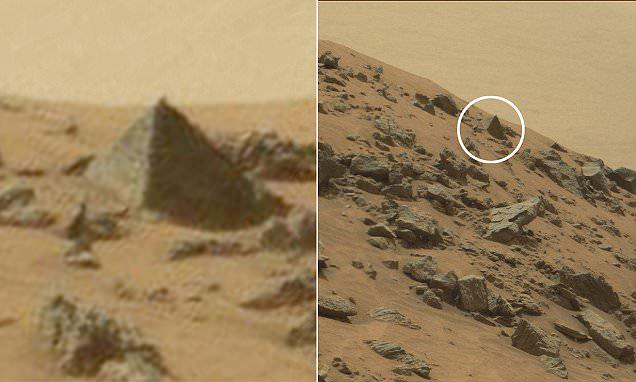 For many this is the ultimate proof that the red planet was inhabited by an ancient and advanced civilization.

 The ancient Egyptian city of Heracleion was once a legend, something known to modern man only by myth and ancient historians.


